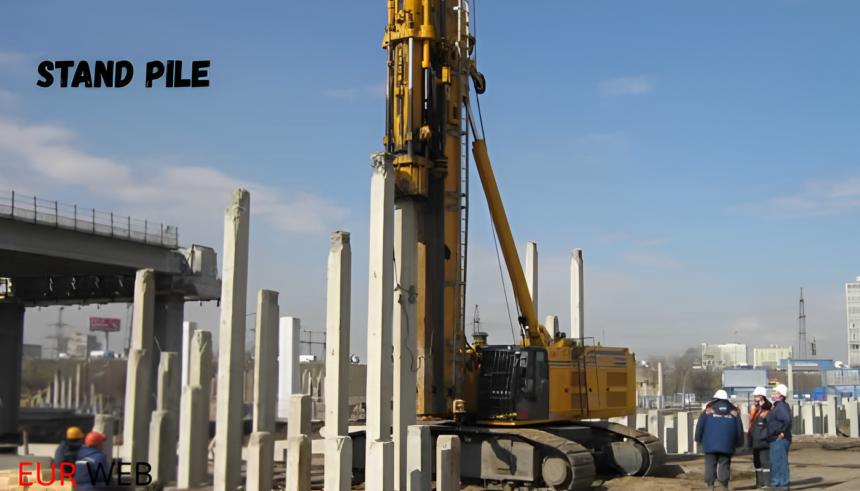
If you work in construction, civil engineering, or any industry that involves ground support and foundation work, you have almost certainly come across the term stand pile. But what exactly is a stand pile? How does it work, and when should you use one? This article covers everything you need to know about stand piles: what they mean, the different types available, where they are used, and how to choose the right one for your project.
- What Is a Stand Pile and What Does It Mean?
- The History and Background of Stand Piles
- How Does a Stand Pile Work?
- The Difference Between Temporary and Permanent Stand Piles
- Types of Stand Piles: A Complete Guide
- Timber Stand Piles: Uses and Limitations
- Steel Stand Piles: Strength and Applications
- Concrete Stand Piles: When and Why They Are Used
- Composite Stand Piles: A Modern Alternative
- Stand Pile vs Other Pile Types: Key Differences
- Where Are Stand Piles Commonly Used?
- Stand Pile Installation: A Step by Step Guide
- What Equipment Is Used to Install Stand Piles?
- How Deep Should a Stand Pile Go?
- Load Bearing Capacity of Stand Piles Explained
- Stand Pile Costs: What Affects the Price?
- Advantages and Disadvantages of Stand Piles
- Environmental Impact of Stand Piles
- Stand Pile Maintenance and Lifespan
- Stand Pile Standards and Regulations in the UK
- Common Mistakes to Avoid When Using Stand Piles
- FAQs About Stand Piles
- Final Thoughts
What Is a Stand Pile and What Does It Mean?
A stand pile is a structural element installed vertically into the ground to provide support, stability, and load bearing capacity for a structure above. The term refers to a pile that is designed to stand firm under pressure, transferring loads from the surface down into stronger layers of ground below. Stand piles are used wherever the ground near the surface is too weak, too soft, or too unstable to support a structure on its own. By going deeper into the ground, a stand pile finds the strength and stability that the surface layer cannot provide. The basic definition is simple: a stand pile stands in the ground so that everything built above it can stand too.
The History and Background of Stand Piles
The concept of driving vertical supports into the ground to create stable foundations is one of the oldest engineering ideas in human history. Ancient civilisations built on soft or waterlogged ground by driving wooden posts deep into the earth, creating platforms strong enough to support entire settlements. Over centuries that basic idea evolved. Timber gave way to steel and concrete. Hand driving gave way to mechanical and hydraulic installation equipment. Simple posts became engineered structural elements designed to precise load specifications. Today stand piles are a standard part of the construction toolkit, used on projects ranging from small residential developments to major infrastructure programmes around the world.
How Does a Stand Pile Work?
The principle behind a stand pile is straightforward. When the ground near the surface cannot support the loads being placed on it, the pile transfers those loads downward to a layer of ground that can. This happens in two main ways. End bearing is where the base of the pile rests on a firm layer such as rock or dense gravel and the load passes straight down through the pile into that layer. Skin friction is where the pile grips the surrounding soil along its full length and the load is transferred gradually through that contact rather than at a single point at the bottom. Many stand piles use a combination of both mechanisms depending on the ground conditions they pass through on the way down.
The Difference Between Temporary and Permanent Stand Piles
Not all stand piles are meant to stay in the ground forever. Temporary stand piles are installed to provide support during a specific phase of construction, such as holding back soil during an excavation, and are removed once that phase is complete. Permanent stand piles become part of the finished structure and remain in the ground for the life of the building or infrastructure they support. Understanding whether a stand pile is temporary or permanent affects everything from the material used to the level of corrosion protection required and the design standard it needs to meet.
Types of Stand Piles: A Complete Guide
There is no single type of stand pile. Different materials, ground conditions, and structural requirements call for different solutions. Choosing the wrong type can cost you time and money. Here is what each one does.
Timber Stand Piles: Uses and Limitations
Timber stand piles are the oldest type and are still used today in certain applications. They work well in waterlogged ground where constant moisture actually preserves the wood and prevents decay. They are lightweight, relatively inexpensive, and easy to handle on site. Their main limitation is load capacity. Timber piles cannot carry the kind of loads that steel or concrete can, which makes them unsuitable for heavy structures. They are most commonly used for lighter applications such as jetties, small bridges, and temporary works.
Steel Stand Piles: Strength and Applications
Steel stand piles are the most widely used type in modern construction. They are strong, reliable, and can be driven to significant depths even in hard ground. They are easy to cut and extend on site if conditions turn out differently than expected, and they can be tested reliably to confirm their load capacity before construction begins above them. Steel stand piles come in several forms including H section piles, pipe piles, and sheet piles, each suited to different ground conditions and structural requirements.
Concrete Stand Piles: When and Why They Are Used
Concrete stand piles offer excellent load capacity and good resistance to corrosion in many environments. Precast concrete piles are manufactured off site to precise dimensions and driven into the ground in a similar way to steel piles. Cast in situ concrete piles are formed by drilling a hole and pouring concrete directly, which works well in softer ground where driving is not practical. Concrete piles are a good choice where corrosion is a concern and where the ground conditions suit their installation method.
Composite Stand Piles: A Modern Alternative
Composite stand piles bring two or more materials together, taking the best quality from each to create a stronger, more versatile solution than either material could deliver on its own. A common example is a steel tube filled with concrete, which gives the strength and driveability of steel combined with the mass and stiffness of concrete. Composite piles are used where neither steel nor concrete alone provides the ideal solution.
Stand Pile vs Other Pile Types: Key Differences
Stand piles are vertical load bearing elements designed primarily to carry loads downward into the ground. They differ from raking piles, which are installed at an angle to resist lateral forces, and from ground anchors, which work in tension rather than compression. The choice between different pile types depends on the direction and nature of the loads being applied, the ground conditions, and the specific requirements of the structure being supported.
Where Are Stand Piles Commonly Used?
Stand piles are used across an enormous range of projects and industries. Building foundations are the most obvious application, particularly in urban areas where ground conditions are poor and structures need to transfer their loads to deeper, stronger layers. Bridge foundations rely on stand piles to carry both the vertical weight of the structure and the lateral forces from traffic, wind, and water. Marine and waterfront structures including jetties, piers, and harbour walls use stand piles to provide stable foundations in challenging ground conditions close to or beneath water. Industrial and infrastructure projects such as power stations, waste treatment works, and major transport schemes all use stand piles where ground conditions demand a deep foundation solution.
Stand Pile Installation: A Step by Step Guide
Installing stand piles follows a clear and well-established sequence. The process starts with a thorough site investigation to understand the ground conditions and determine how deep the piles need to go. This information feeds into the pile design, which establishes the required size, material, and installation method. On-site the piling rig is positioned carefully at each pile location. The pile is lifted into place, and installation begins. For driven piles a hydraulic or diesel hammer is used to force the pile into the ground, with engineers monitoring the resistance at each stage to confirm the pile is performing as predicted. Once all piles are installed, load testing is carried out on a sample of piles to verify that they meet the required performance before the main structure is built above them. This testing is a critical quality assurance step that should never be skipped.
What Equipment Is Used to Install Stand Piles?
The equipment used to install stand piles depends on the pile type and the ground conditions. Hydraulic hammers are the most common choice for driven piles, offering precise control over the energy applied with each blow. Diesel hammers are used where hydraulic equipment is not available or practical. Vibratory hammers use high-frequency vibration rather than impact to drive piles, which generates less noise and is better suited to certain soil types. For bored piles, rotary drilling rigs are used to form the hole before the pile or concrete is installed.
How Deep Should a Stand Pile Go?
There is no fixed answer because the required depth depends entirely on the ground conditions and the loads being applied. A pile needs to go deep enough to reach ground that is strong enough to carry the design load, whether that is through end bearing on a firm layer or through sufficient skin friction along its length. In practice stand piles can range from just a few metres deep for lightly loaded structures in reasonable ground to well over 50 metres for heavily loaded foundations in poor conditions. The required depth is determined by the geotechnical engineer based on the results of the site investigation and the structural loads provided by the project team.
Load Bearing Capacity of Stand Piles Explained
The load a stand pile can carry depends on several factors including the size and material of the pile, the depth it reaches, and the ground conditions along its length and at its base. Structural calculations carried out by a geotechnical engineer establish the required pile size and depth for a given set of loads. These calculations are then verified through pile load testing on site, where test piles are loaded to levels above the design load to confirm they perform as required. This combination of design calculation and physical testing gives confidence that the foundation will perform safely throughout the life of the structure.
Stand Pile Costs: What Affects the Price?
Stand pile costs vary significantly depending on the type and size of pile required, the depth needed, the ground conditions encountered, and the complexity of the site. Larger and deeper piles cost more in both materials and installation time. Difficult ground conditions slow installation and increase equipment costs. Site access, working space for the piling rig, and the logistics of getting materials to site all add to the overall cost. Getting an accurate cost estimate always requires a proper ground investigation first. Any estimate made without ground investigation data is unlikely to be reliable.
Advantages and Disadvantages of Stand Piles
Stand piles offer genuine advantages in the right conditions. They can carry very high loads, reach significant depths, and provide reliable foundations in ground that would be completely unsuitable for shallow construction. They are well understood, widely tested, and backed by decades of engineering experience. The main disadvantages are cost and programme. Piling requires specialist equipment and expertise, adds time to a construction programme, and can be significantly more expensive than shallow foundation alternatives where ground conditions allow. Noise and vibration from pile driving can also be a challenge on urban sites or near sensitive structures.
Environmental Impact of Stand Piles
Construction has a real environmental footprint and piling is no exception. The production of steel and concrete both involve significant energy use and carbon emissions, though the industry is making progress on reducing these through increased use of recycled materials and lower carbon manufacturing processes. On site, pile driving generates noise and vibration that can affect neighbours and local wildlife. Alternative installation methods such as press in piling reduce these impacts significantly and are increasingly used where environmental sensitivity is a concern. At the end of their service life, steel piles can be extracted and recycled, giving them an advantage over concrete in terms of overall material impact.
Stand Pile Maintenance and Lifespan
A well designed and properly installed stand pile in a stable environment can last for a century or more with minimal maintenance. In more aggressive environments, particularly marine settings or chemically contaminated ground, the service life depends on the quality of the corrosion protection system and how consistently it is maintained. Regular inspection of accessible pile heads and any exposed sections is good practice on any long term structure. For marine piles, periodic survey of submerged sections helps identify any deterioration before it becomes a structural problem.
Stand Pile Standards and Regulations in the UK
Stand pile design and installation in the UK is governed by Eurocode 7, the principal standard for geotechnical design, which sets out the requirements for pile design, testing, and verification. The Federation of Piling Specialists and the Steel Construction Institute both publish detailed guidance that is widely followed across the industry. Any stand pile project should be designed by a qualified geotechnical engineer and installed by an experienced specialist contractor working within the relevant standards and regulations.
Common Mistakes to Avoid When Using Stand Piles
The most common and costly mistake in any piling project is skipping or cutting short the ground investigation. Without reliable information about what is in the ground, no engineer can design a pile with confidence, and no contractor can install one predictably. Other common mistakes include underestimating the depth required, choosing the wrong pile type for the ground conditions, failing to carry out proper load testing, and neglecting corrosion protection in aggressive environments. All of these can be avoided with proper planning, experienced professionals, and a commitment to following the right process from the start.
FAQs About Stand Piles
What is a stand pile used for?
A stand pile is used to transfer the load of a structure down through weak or unstable ground to a deeper layer that is strong enough to carry it safely. It is a deep foundation solution used when shallow foundations are not suitable.
What materials are stand piles made from?
Stand piles can be made from timber, steel, concrete, or a combination of materials. The right choice depends on the ground conditions, the loads being applied, the environment, and the budget available.
How long does it take to install stand piles?
Installation speed depends on the pile type, ground conditions, and project size. A single driven pile can be installed in minutes in favourable ground. Large piling programmes on major projects typically run over several weeks or months.
How do you know if a stand pile is performing correctly?
Pile load testing is carried out after installation to verify that piles meet their design requirements. Test piles are loaded beyond their design capacity to confirm they perform safely before construction above them begins.
Are stand piles suitable for all ground conditions?
Stand piles can be designed for a very wide range of ground conditions, but the right type and installation method varies significantly depending on what is in the ground. A thorough site investigation is always the essential first step.
Final Thoughts
Stand piles are not the most visible part of any construction project. They go into the ground and disappear from sight. But without them, a huge proportion of the buildings, bridges, and infrastructure we rely on every day simply could not stand. What makes stand piles so dependable is the combination of strength, versatility, and reliability they bring to even the most challenging ground conditions. From city centre high rises to coastal harbour walls, they have been a trusted foundation solution for well over a century and that is unlikely to change any time soon. No pile type is right for every project though. Ground conditions, structural loads, budget, and site constraints all influence the right choice. Getting that decision right starts with proper ground investigation and experienced geotechnical advice from the earliest stage possible. Get the foundations right and everything built above them will stand the test of time. That has always been the point of stand piling and it remains the point today.